Universal Design in Practice: Around the World on 7 Principles
Applicability of Universal Design around the globe and the 7 principles in practice
The Capital P Lab
Contributing Writer
- Universal Design
- 7 Principles
- best practices
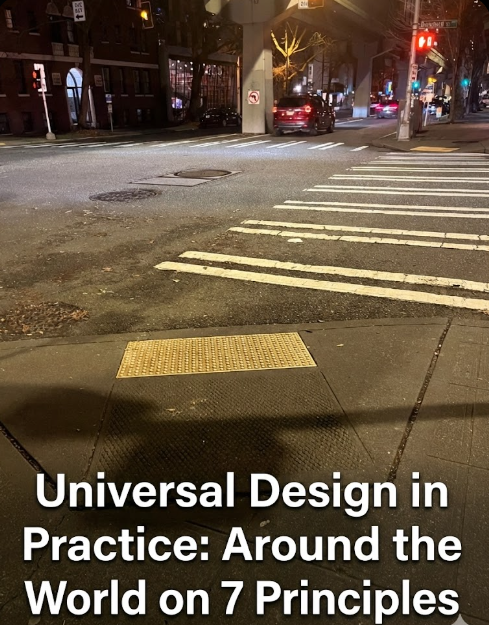
Universal Design in Practice: Around the World on 7 Principles
The landscape of Universal Design frames an inclusive, equitable space that invites people with various abilities as equal users and patrons. Driven by the United Nations Convention on the Rights of Persons with Disabilities (CRPD), Universal Design is increasingly being accepted as a philosophy that can benchmark environments, products and services that are integrative.
Across the world, universal design is visible in ordinary infrastructure. Tokyo integrates tactile paving across railway stations and sidewalks, benefiting visually impaired users while also aiding navigation for others. Barcelona designs streets and public spaces with wide pavements, gentle gradients, and accessible beaches. Singapore embeds universal design into housing and transport policy. In India, systems like the Delhi Metro demonstrate how inclusive intent can translate into large-scale public infrastructure, even as gaps remain in consistency and execution.
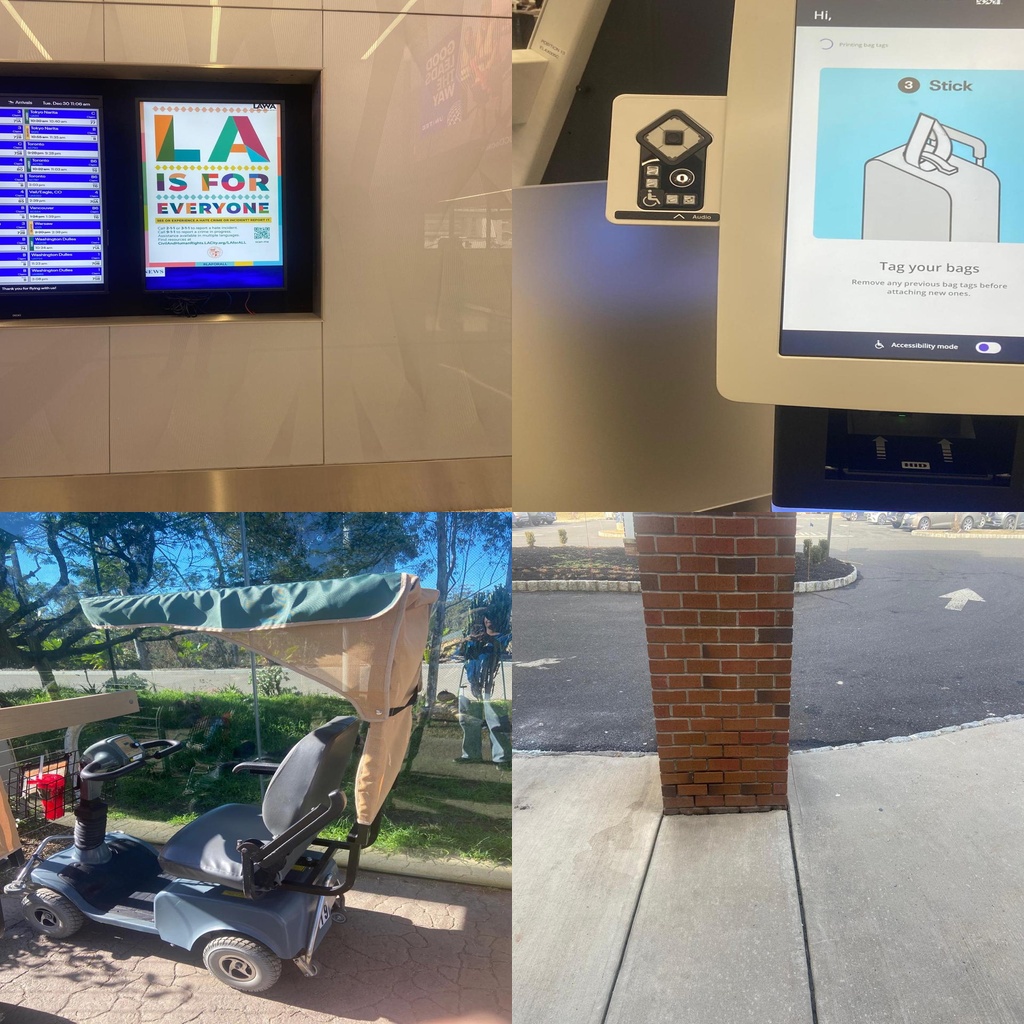
Images: Seamless integration of Universal Design in everyday life
The Indian Context: Progress and Possibility
Universal Design in India lies at the intersection of 3 policy initiatives/systems - the United Nations Convention on the Rights of Persons with Disabilities (CRPD), the Rights of Persons with Disabilities (RPwD) Act, 2016 and the National Building Code in conjunction with other allied sectoral government policies and programs like the Smart Cities Mission, 2015 and National Policies on Women, Elderly and Children (2001, 2011, 2013).
On the global front, India ratified the UN Convention on Rights of Persons with Disabilities in 2007 to support the general principles of equality, participation/self determination, empowerment and dignity.
The RPWD specifies 21 types of disabilities under the ambit of the act, along with mandatory provisions on accessibility in built environments and non discrimination that include Blindness, Low-vision, Leprosy Cured persons, Hearing Impairment (deaf and hard of hearing), Locomotor Disability, Dwarfism, Intellectual Disability, Mental Illness, Autism Spectrum Disorder, Cerebral Palsy, Muscular Dystrophy, Chronic Neurological conditions, Specific Learning Disabilities, Multiple Sclerosis, Speech and Language Disability, Thalassemia, Hemophilia, Sickle Cell Disease, Multiple Disabilities including deaf-blindness, Acid Attack victims and Parkinson’s disease.
The National Building Code of India (NBC 2016) incorporates barrier-free design provisions aligned with the Harmonised Guidelines for Universal Accessibility, mandating ramps, lifts, accessible toilets, signage, and circulation for persons with disabilities. These provisions apply to public buildings, transport hubs, hotels, and heritage-adjacent infrastructure, directly shaping the accessibility ecosystem in the country.
Notwithstanding all of the above, implementation of Universal Design principles in India faces an obvious set of challenges that is to be expected when they are applied as an afterthought, as an intermediary step rather than using it as the foundation. These range from a lack of awareness among administrative units and the general public to policy apathy, and haphazard retrofitting in public and private spaces. The additional aspect of cost results in piecemeal and uneven implementation by and across sectors.
From Policy to Practice
In December 2015, India launched the Sugamya Bharat Abhiyan/ Accessible India Campaign. It aimed to ensure universal accessibility across three vital domains:
Built Environment Accessibility
Transportation System Accessibility
Information and Communication Technology (ICT) ecosystem Accessibility
The Department of Empowerment of Persons with Disabilities (DEPwD), Ministry of Social Justice and Empowerment is the nodal agency charged with implementation of the program. Since its launch 10 years ago, the initiative has made some progress in retrofitting airports, bus stops and railway stations with accessibility features. It has also made progress in making government websites more accessible. It has thus shaped the discourse on scope of accessibility and has highlighted inter sectoral linkages and responsibilities in the space.
At the operational intersection of the above policies, acting as a technical bridge that translates rights and policy intent into a tangible framework/set of standards/technical toolset/compliance manual/ operational guidelines for implementation lie the Harmonised Guidelines and Standards for Universal Accessibility in India, 2021 released by the MoHUA, GOI
These Guidelines focus on total accessibility (barrier free// ramps, lifts, tactile cues etc) and inclusivity in built environment, transportation and information portals. They are explicitly positioned as India’s practical vehicle for achieving universal accessibility.
Figure 1: From Limited to Universal Accessibility
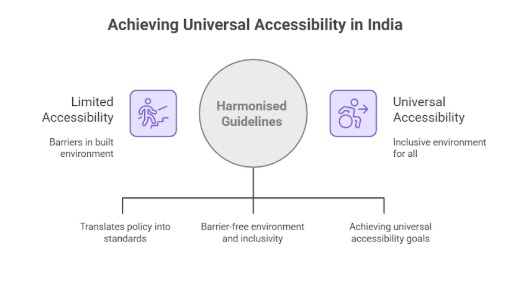
How to get from Harmonized Guidelines to Universal Design?
The journey from the first to the second is one of a move from a technical checklist for architects, builders and government regulatory agencies to built environments and public spaces based on participatory design which includes co-creating with users. It is a move beyond just physical retrofits to also meeting cognitive and sensory needs like signs(audio/visual), adjusted lights and calming spaces. It is also one of increased focus on capacity building, reducing stigma and designing solutions that seamlessly blend rather than create separation or segmentation.
Universal design ultimately invites a mindset shift. It asks us to question who is excluded by default choices and to recognize that good design quietly supports everyone—without labels or segregation. Rather than asking who needs special access, universal design encourages us to design environments that reflect real life in all its variation. In doing so, inclusion becomes not an exception, but the norm.
To continue the conversation in the series, our next blog moves from general application of Universal Design to specific needs around sensory inclusion, a seemingly niche yet much needed aspect of equitable access and use of public spaces.
Enjoyed this article?
Subscribe to get our latest insights delivered to your inbox.
Join the Conversation
Share your thoughts and engage with our community.0 comments
Share Your Thoughts
Your perspective enriches our community
Loading comments...
Continue Reading
More articles you might enjoy

Sensory Inclusion: The Dialogue Opens Up
Sensory Inclusion, the key to unlock equitable participation

Bridging the Gap: Accessibility at the Heart of Urban Climate Resilience
How disability inclusion is critical to translating climate policy into on-ground resilience

Building a Purple Workforce
Empowering Ability through Employment